AI-generated, human-reviewed.
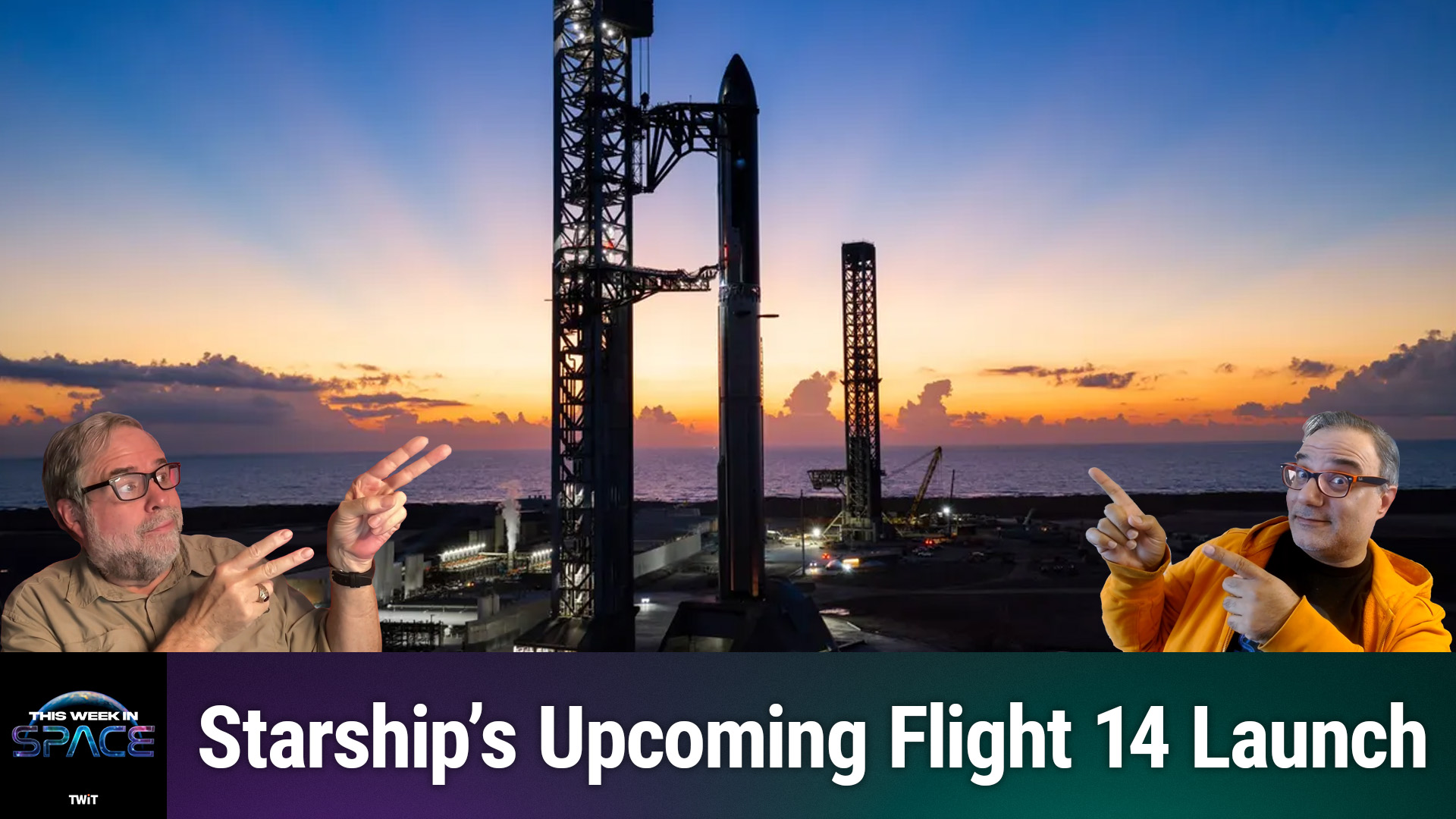
SpaceX is preparing for a pivotal moment: the first true orbital flight of Starship, Flight 14, carrying a payload of 26 operational Starlink V3 satellites. According to Tariq Malik and Rod Pyle on This Week in Space, this closely watched mission could mark a turning point not only for SpaceX, but for the global launch industry as SpaceX accelerates its transition away from the immensely successful Falcon 9 rocket.
What is SpaceX's Starship Flight 14 — And Why Does it Matter?
Starship Flight 14 is scheduled to launch from Boca Chica, Texas on September 28, 2026, with a mission profile aiming for a 10-hour flight in a 275 km orbit. The booster will attempt a soft landing in the Gulf of Mexico while the Starship upper stage will orbit Earth six times before a Pacific Ocean splashdown. This is the first fully commercial Starship flight carrying an operational batch of Starlink V3 satellites, a step beyond previous test flights.
On This Week in Space, Tariq Malik explained that Starship is designed to launch heavier and larger payloads than the Falcon 9, which is currently the world's most flown and recycled rocket. As Starship moves toward operational status, it stands to fundamentally alter satellite launches, space station logistics, and even NASA's crewed missions.
Why SpaceX is Phasing Out Falcon 9 and Crew Dragon
Falcon 9 has set industry records, with 165 flights in 2025 alone and a reputation for reliability and cost-effective, partially reusable launches. However, Rod Pyle and Tariq Malik discussed how SpaceX leadership, specifically Gwynne Shotwell, is determined that the company be its own disruptor. The philosophy is simple: "If we don't obsolete our own products, someone else will," Shotwell said.
SpaceX plans to gradually sunset both Falcon 9 and the Crew Dragon capsule as Starship demonstrates routine and crew-rated flight capabilities. This transition is already impacting customers who depend on Falcon 9's affordable medium-lift service. Payload providers, national programs, and even NASA are now facing a narrowing window for Falcon 9 missions. NASA has already pre-purchased additional Crew Dragon flights, but is also preparing alternatives for station access as Starship and Boeing's Starliner assume larger roles.
What Does This Mean for Launch Customers and the Broader Space Industry?
Shifting away from the Falcon 9 creates significant uncertainty for commercial payload owners and emerging space nations. Many rely on Falcon 9 for cost-effective, mid-size payload deliveries. While competitors such as Rocket Lab (developing Neutron), the German Isar Aerospace, and Europe's Ariane 6 are in the pipeline, none have the proven cadence or economies of scale SpaceX delivers now.
As Starship comes online, SpaceX's own demand — especially for launching massive numbers of Starlink satellites — will fill many launches. But the industry's mid-level satellite and crewed mission needs will require new providers or adaptation to the Starship's higher capacity, which may not be economical for all missions.
Starship's Role in Future Habitats and Sci-Tech Missions
Beyond launches, Starship's enormous pressurized volume (comparable to the International Space Station) enables concepts for in-space habitats, lunar landers, and deep space missions. According to Rod Pyle, NASA is already examining Starship for potential use as a long-term orbital habitat.
Meanwhile, companies like Vast are developing modular space station and lunar base elements, some of which may potentially be deployable by Starship. The rise of these new spacecraft and habitat systems is poised to reshape both Earth orbit and lunar infrastructure.
The International Race and Geopolitical Impacts
Flight 14 also underscores the global competition in space. Tariq Malik noted how China is fast-tracking its own heavy-lift and reusable rockets, as well as lunar missions. The cadence of retiring reliable vehicles like Falcon 9, and advancing to Starship, is partly a response to these international pressures.
What You Need to Know
- Starship Flight 14 aims for the first true orbital Starship flight with a full operational payload.
- SpaceX is phasing out Falcon 9 and Crew Dragon as Starship becomes operational.
- This transition will impact commercial, government, and international launch customers.
- Emerging launch competitors are working to fill Falcon 9's projected gap, but none can match its record yet.
- Starship's architecture enables new possibilities for habitats, lunar bases, and deep space logistics.
- NASA, other nations, and commercial rivals must now adapt to a post-Falcon 9 era.
The Bottom Line
The upcoming Starship orbital attempt may be a watershed moment for SpaceX and the global launch sector. On This Week in Space, Tariq Malik and Rod Pyle laid out both the excitement and the disruption ahead as SpaceX gradually shifts its entire focus to Starship. With competition heating up and legacy rockets retiring, everyone from governments to satellite startups must grapple with a dramatic launch landscape — and the stakes for industry leadership have never been higher.
Want more expert space analysis? Subscribe to This Week in Space for every update:
https://twit.tv/shows/this-week-in-space/episodes/229